

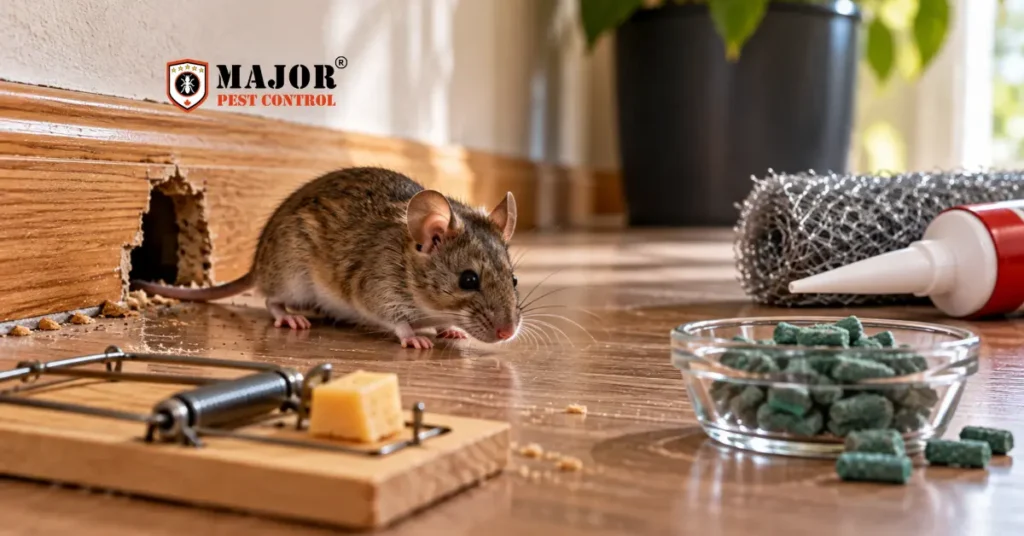
With fall upon us and winter soon to follow, mice are looking for a nice warm place to nest, and your home could host some unwanted visitors before you know it. Mice not only cause damage to your home and property, but they also carry diseases that will put you and your family at risk.
But no fear, Major Pest Control knows tips and tricks to help you not only get rid of a mouse infestation but keep them from coming back!
Major Pest Control is an expert at controlling pest and mice infestations and has been doing it for years. This post will help you learn what you can do to take back control of your home and get rid of mice for good.
Safety Precautions Before You Start
There are important safety considerations you should be aware of and follow when getting rid of mice in your home, business, or on your property. This will help you and your family or staff stay safe while protecting the environment.
- Handle pesticides safely: ensure all pesticide products are clearly marked, kept out of reach of children and pets, and stored in a locked cabinet when not in use.
- Do not use chemical baits inside: for safety reasons. In their place, use mouse traps, repellents, and exclusion tactics outlined in this article. If you must use them, ensure you use tamper-resistant bait containers to prevent children and pets from accidentally coming into contact with the bait.
- Wear personal protective equipment (PPE), such as gloves, goggles, and long sleeves and pants, when handling baits, pesticides, or dead mice for disposal.
- Always read and follow the instructions on all rodenticides, pesticides, and any toxic products before handling them.
Major Pest Control Edmonton shares 5 Effective Methods to Get Rid of Mice
1. Know the Signs of Mice Activity
Mice are not as sneaky as you might think. They leave evidence of their presence everywhere they go.
Here are the key signs to watch for:
- Chew and Bite Marks: Gnaw marks on food packaging, baseboards, floor trim, and wooden furniture legs.
- Holes in Floors and Walls: Just over an inch in diameter with clean, precise edges along baseboards and behind appliances.
- Food Crumbs and Debris in Unusual Places: Food particles on shelves, inside cabinets, or randomly on the floor.
- Mouse Droppings: Small, dark, and oblong; found behind cabinets, under sinks, and in room corners.
- Urine Stains on Floors or Carpets: Dark spots on floors or carpets; glow under UV light.
- Nesting Materials: Clusters of shredded fabric, paper, string, or pet hair tucked in hidden spots.
- Unusual Pet Behaviour: Persistent barking, pawing, or sniffing near walls and appliances.
- Musty or Ammonia-Like Odour: A stale, ammonia-like smell in enclosed spaces signals a larger infestation.
- Scratching and Squeaking Sounds: Most noticeable at night inside walls, ceilings, or under floors.
10. Live Mouse Sightings: A daytime sighting almost always means a large, active infestation.
2. Make It Difficult for Mice to Find Food and Shelter
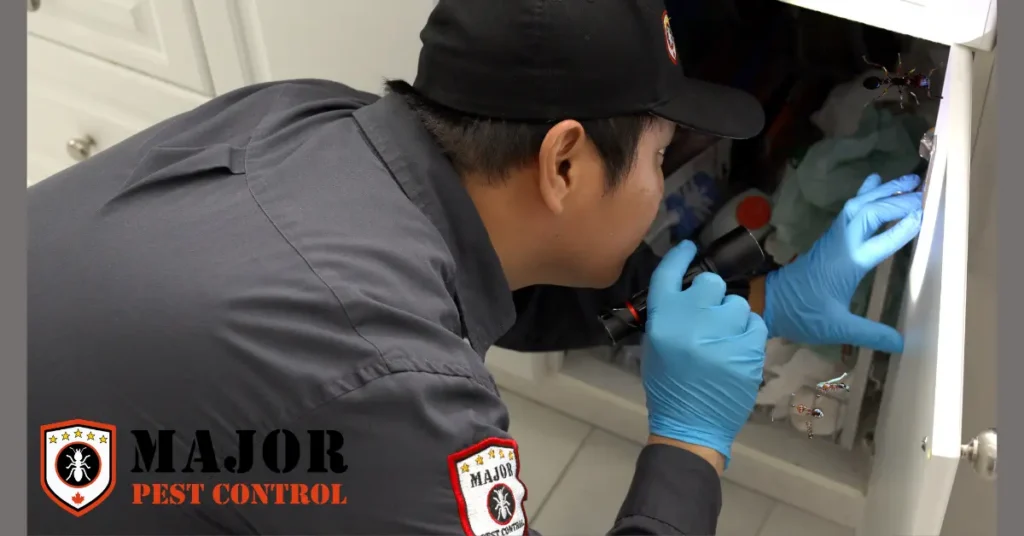
If mice can’t find food, water, or shelter in your home, they won’t stick around. A clean, clutter-free home is your first line of defence, inside and out.
Clean Inside Your Home:
- Store dry goods in airtight glass or metal containers. Mice can chew through plastic, so avoid it.
- Remove pet food dishes after feeding and clean up any spills immediately.
- Take out garbage and recycling regularly. Mice forage in bins and use paper and cardboard for nesting.
- Store clothing, blankets, and towels in heavy-duty plastic bins with lids to prevent nesting.
- Eliminate dark corners and clutter that give mice places to hide and nest.
Clean Outside Your Home:
- Trim foliage and tree branches at least 3 feet away from your home’s foundation.
- Store wood piles at least 18 inches off the ground and 12 feet away from the house.
- Keep tight lids on outdoor bins to avoid attracting mice.
- Mow your lawn regularly and trim plants to reduce outdoor cover for mice.
3. Seal Up Any Entry Points
Mice can squeeze through any gap larger than a quarter of an inch. As temperatures drop in autumn, they actively search for warm indoor spaces.
- Fix or replace windows and doors to eliminate cracks and gaps.
- Seal holes in siding, doorways, and foundation with caulking, inexpensive and effective.
- Use heavy-gauge wire screen or metal mesh to fill utility entry points for water, electricity, and air conditioning.
- Install metal screens over vents. to avoid expandable foam, as mice will simply chew through it.
- Add door sweeps to all exterior doors to block the gap at the bottom.
- Wrap pipes with sheet metal 12 inches up and finish with glossy varnish to prevent mice from climbing drains.
4. Put Out Mouse Traps
Once you’ve cleaned up and sealed entry points, it’s time to eliminate the remaining mice with traps. There are several types to choose from:
Non-Chemical Mouse Traps For Small Infestations
i) Glue Traps
Coated in sticky adhesive that traps a mouse’s feet on contact. They are less effective, considered inhumane, and must adhere to the floor to work. Least recommended.
ii) Live Traps
Catch mice without killing them, but come with drawbacks — mice released nearby will likely return, and relocating them far away often results in death from exposure. More effort to maintain, and it’s not legal everywhere. Check with your municipality before using.
iii) Snap Traps
The most popular choice — affordable, easy to set and reset, and delivers an instant kill. Place them away from children and pets, in low-traffic areas such as under appliances, attics, and crawl spaces.
iv) Automatic Multiple Catch Traps
Ideal for large infestations – catch multiple mice at once without resetting. Works well in hard-to-reach areas. Note that mice are caught alive and must be disposed of manually.
v) Baiting the Trap
Use peanut butter or seeds to bait your traps. Place them where mouse activity is highest, check regularly, and replace once used — mice can smell dead rodents and will avoid old traps.
Chemical Mouse Baits for Large Infestations
Rodenticides should only be used as a last resort for large or difficult infestations. Always read instructions carefully, as mice may move baits to areas where pets, children, or wildlife could be exposed.
i) Anticoagulants
Prevent blood clotting, causing internal bleeding. Common options include chlorophacinone, warfarin, and diphacinone. Require multiple feedings to work. If ineffective, switch to second-generation formulas such as difethialone or brodifacoum.
ii) Non-Anticoagulants
Include zinc phosphide, cholecalciferol, and bromethalin. Available in grain or seed mixes, and come in three forms:
- Pellets/Blocks: Moisture-resistant, but easily carried off by mice
- Loose Meal: Less likely to be moved, but spoils in damp areas
- Packets: Long-lasting and show signs of consumption, but may attract children and pets
iii) Baiting Techniques
Place bait between the mouse nest and the food source. Pre-bait for three to four days without chemicals to build mouse confidence. Move stations five feet if ignored, and always keep bait fresh.
iv) Safety
Wear protective gear when handling bait. Use tamper-proof stations indoors, away from children and pets. Label each station “RODENT BAIT – DO NOT TOUCH” and store unused bait in a locked location.
5. Avoid Removal Techniques That Don’t Work
Save your time and energy, these popular methods simply don’t deliver results:
- Cats: May catch the occasional mouse, but cannot eliminate an infestation. Mice also carry diseases that cats can contract.
- Repellent Plants: Onions, mint, lavender, and garlic are often recommended, but there is no evidence that they actually repel mice.
- Ultrasonic Devices: May deter mice initially, but mice quickly adapt, and the effect wears off. The same applies to motion-activated sprinklers and imitation hawks.
- Cheese: Despite popular belief, mice don’t prefer cheese. Use high-aroma baits like peanut butter, bacon, nuts, or dried fruit instead.
- Fabric Softener: The strong scent may keep mice away for a day or two, but they will adapt quickly and return.
How Do I Keep Mice Out of My House?
Prevention is far easier than elimination. Mouse-proofing your home stops infestations before they start.
Seal Entry Points
- Replace worn weather stripping on doors, windows, and screens immediately
- Install wire screens over vents (dryer vents, chimneys, roof gaps)
- Repair damaged door and window screens promptly
- Add door sweepers to all external doors
- Fill gaps smaller than ¼ inch—mice squeeze through tiny openings
Use Mouse Repellents
- Apply commercial or homemade repellent around your home’s perimeter and indoor entry points.
- DIY option 1: Equal parts apple cider vinegar and water in a spray bottle
- DIY option 2: Mix chilli flakes, sliced habanero peppers, water, and dish soap
- Reapply monthly to maintain effectiveness
- Safe for pets and wildlife
Eliminate Water Sources
- Fix plumbing leaks immediately
- Improve home ventilation to reduce moisture
- Keep moisture barriers intact
- Close doors and windows during rainy or snowy weather
- Use a dehumidifier as needed
- Keep your home dry—mice are attracted to damp environments
Control Food Sources
- Clean up food spills and crumbs right away
- Do dishes promptly; don’t leave them sitting
- Remove pet food bowls after meals
- Establish a kitchen-only eating rule to contain mess
- Store food in sealed containers
- Keep garbage in sealed bins
Bottom line: Combine sealing, repellents, and eliminating water and food sources for maximum protection against mice.
FAQs About Mice
Q: Will I ever get rid of mice?
Yes. You can get rid of mice for good! The key is to act fast and stay consistent.
Start by sealing all entry points around your home. Then combine multiple methods, such as traps, baits, and removing food sources, to completely clear the infestation.
Stay on top of it every day, and the problem will be gone before you know it. Need extra help? Major Pest Control offers guaranteed mouse removal so you can have peace of mind.
Q: Why did mice target my home?
Mice didn’t pick your home on purpose. They just needed a warm, safe place to survive the cold Canadian winter. Any home they could sneak into would do.
Mice can squeeze through a gap as small as a quarter of an inch. That means even tiny cracks in your walls, foundation, or doors are enough to let them in. Sealing all entry points is the best way to keep them out for good.
Once inside, mice only need three things to stay comfortable:
Food: They’ll chew through cardboard boxes and thin plastic bags to reach your pantry
Water: Even small drips or spills are enough
Nesting material: Paper, string, pet hair, towels, blankets, anything soft will do
The fix: Remove easy food sources, seal entry points, and act quickly at the first sign of mice.
Q: Where are mice during the day?
During the day, mice hide and rest in dark, quiet spots such as:
1. Inside walls: They nest between wall cavities where it’s warm, hidden, and completely undisturbed.
2. Attics and crawl spaces: Low foot traffic, poor lighting, and insulation material make these perfect nesting zones.
3. Cluttered storage areas: Stacked boxes, old furniture, and rarely touched items give mice excellent cover and nesting material.
4. Behind appliances: The warm space behind fridges, stoves, and washing machines is a favourite daytime retreat.
5. Under floorboards: Gaps beneath flooring offer mice a safe, hidden corridor to move around your home undetected.
6. Inside kitchen cabinets: Especially lower cabinets near food sources, where they can eat and hide without being noticed.
Q: How do I confirm the mouse infestation is gone?
The clearest sign is the absence of new mouse droppings. Check the spots where you originally found droppings. If nothing new appears after several days, that’s a very good sign.
Also, watch out for these other infestation signs disappearing:
1. No new claw marks on floors, walls, or furniture.
2. No new holes chewed through walls, baseboards, or floors.
3. No food debris showing up in unusual places.
Pro Tip: Don’t relax too soon. Mice are sneaky — a small number can go unnoticed for a while. Stay consistent with your checks for at least two to three weeks before declaring the problem solved.
Q: Do mice carry diseases?
Yes, and this is exactly why a mouse infestation should never be ignored. Mice are known to spread more than 55 diseases that can affect both humans and pets.
Some of the most serious diseases mice carry include:
1. Hantavirus: spreads through mouse droppings, urine, and saliva
2. Salmonella: a dangerous food-borne illness contaminating your kitchen
3. Rat-bite fever: transmitted through bites or contact with infected mice
4. Typhus: carried by fleas that live on mice
5. Campylobacter: causes serious stomach illness
6. Rickettsialpox & the Plague: rare but still a real risk
Don’t wait, contact a professional pest control service like Major Pest Control to eliminate the problem safely.
Q: How do pest control companies get rid of mice?
Professional pest control companies use a proven, step-by-step approach to eliminate mice. That’s much harder to achieve with DIY methods alone.
Here’s exactly what to expect:
1. Thorough Inspection: A technician checks your entire home to find entry points, nesting areas, and the extent of the infestation.
2. Sealing Entry Points: All gaps, cracks, and holes are identified and sealed to stop more mice from getting in.
3. Strategic Trap Placement: Professional-grade traps and bait stations are placed in high-activity areas for maximum results.
4. Safe Use of Rodenticides: Where needed, pest control professionals use Health Canada-approved rodenticides safely and effectively.
5. Remove Nest: Existing nests are located and removed to eliminate health risks.
6. Follow-Up Visits: Technicians return to monitor traps, remove caught mice, and confirm the infestation is fully gone.
At Major Pest Control, our certified technicians serve homeowners across Edmonton and Calgary with guaranteed mouse removal you can count on.
Call Local Experts in Pest Control

If mice have taken over your Edmonton home, we can help! While mouse infestations are frustrating, the good news is that the experts here at Major Pest Control will help you eliminate mice, giving you back your home.
Our team offers humane, eco-friendly mouse control services for residential and commercial properties across Northern Alberta, including Edmonton, Leduc, Sherwood Park, St. Albert, Spruce Grove, Stony Plain, and more!

Reviewed By Jun Bukht, ACE, CWCO
Jun Bukht is the founder and owner of Major Pest Control. He holds the Associate Certified Entomologist (ACE) designation and is a Certified Wildlife Control Operator (CWCO), reflecting his commitment to science-based, humane pest management practices. Jun is the author of “Major Pest Control: Stories From the Trenches – A Homeowner’s Guide to Pest Control”, a best-selling book on KDP. His work and insights have been featured in television, radio, print, and online media across Alberta, where he discusses pest control, wildlife issues, and integrated pest management.